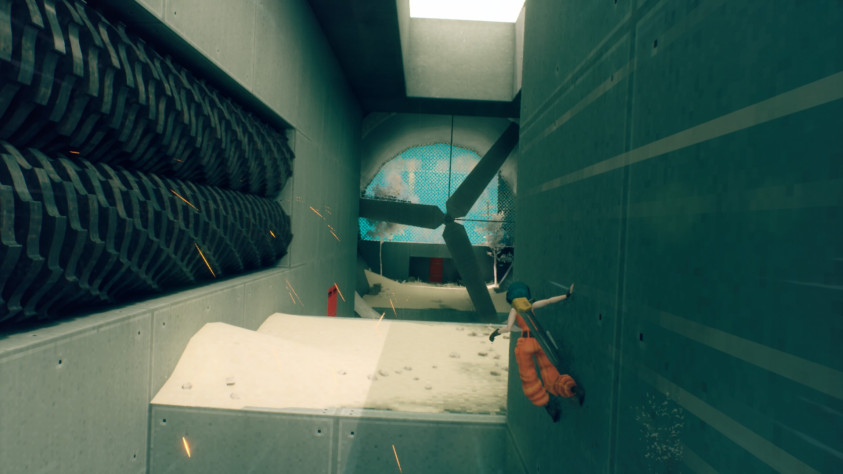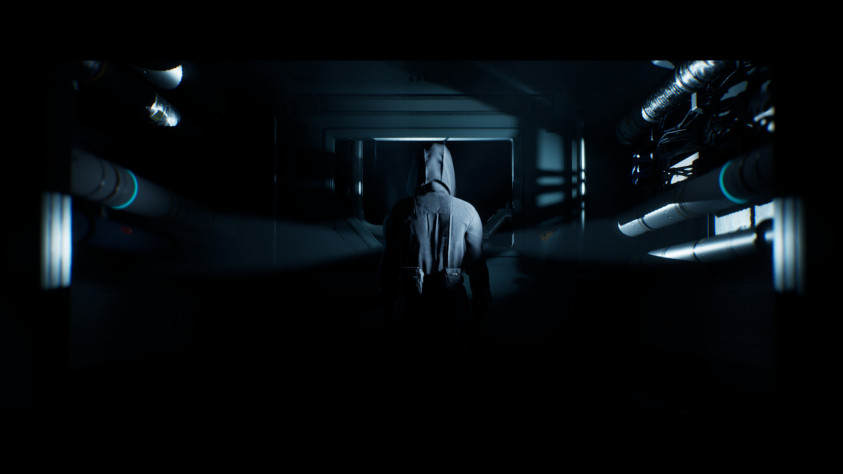
After Supermassive Games wrapped up the first season of The Dark Pictures Anthology with the rather disappointing The Devil in Me back in 2022, it was clear that churning out a horror game every single year wasn’t working. So, when they took a longer break to work on Directive 8020, I actually had high hopes. I expected a massive leap forward. Unfortunately, what I got wasn’t a revolution for the genre, but rather a familiar formula that stripped away its best cinematic elements and replaced them with outdated gameplay.
Don’t get me wrong—it’s not a complete disaster. But man, it made me wish for a “skip gameplay” button more than once.
A Fresh Sci-Fi Setup with Wasted Potential
For the first time, Supermassive takes us to deep space. The premise hooked me immediately: Earth is dying, and humanity’s last hope lies 12 light-years away on Tau Ceti f. I took control of the crew aboard the colony ship Cassiopeia, who are suddenly woken from cryosleep because a meteorite has breached the hull. But the real threat isn’t the vacuum of space; it’s an alien organism that sneaks aboard and starts mimicking the crew.
With a setup like this, I was expecting a high-budget version of Among Us or John Carpenter’s The Thing. I was ready for intense psychological tension, paranoia, and tough choices where I’d have to guess which of my crewmates was human and who was an alien imposter.
Sadly, the writers dropped the ball here. The game rarely lets you solve these paranoia riddles. If a character is a mimic, the game either beats you over the head with hints or just flat-out reveals them as the villain right away. The Steam description promised that “trust is a luxury,” but during my playthrough, every time two characters split up and reunited, my paranoia led to absolutely nothing. The story just moved forward without any structural surprises.
That said, the narrative itself is actually quite engaging, and the main plot twist caught me completely off guard. The pacing is a bit sluggish in the first half, but the characters are surprisingly well-written. From the traumatized military medic to the Buddhist mechanic, they felt grounded and likeable. I genuinely cared about keeping them alive.
StUCK IN THE PAST: THE GAMEPLAY NIGHTMARE
While I can praise the story, the actual gameplay is where Directive 8020 falls apart. Supermassive tried to add more “traditional” gaming mechanics, and I hated almost all of them.
The game is packed with tedious fetch-quests—like finding batteries to power doors over and over again. But the absolute worst part is the stealth. It feels like a bad relic from the PS3/Xbox 360 era. You crouch behind chest-high walls, wait for a predictable enemy path, dash to the next cover, and repeat. It’s heavily scripted, clumsy, and honestly just boring.
To make matters worse, your character has a scanner that can be spammed indefinitely, completely erasing any tension because you always know exactly where the monster is. And if you do get caught? A simple Quick-Time Event (QTE) lets you break free instantly.
Ironically, while the early-game QTEs are a joke, the late-game QTEs are brutally unforgiving. The final chapters are crammed with them, and missing a single button prompt can result in a character you’ve spent hours protecting dying a completely stupid, unearned death.
THE TIMELINE TREE: A BLESSING AND A CURSE
To alleviate the frustration of permanent character deaths, the developers introduced a massive feature: a fully interactive Story Tree. At any point, you can open it up, look at the narrative branches, and literally jump back to a previous scene to rewrite history and save your favorite character.
I love this concept in theory, but the execution ruins the mystery. The tree is a massive spoiler generator. Even if you don’t open it, the game’s pop-ups will sometimes announce a character’s death or hint at a wrong choice before it even happens on screen, practically begging you to rewind time. It completely shatters the stakes of a horror game.
THE VERDICT
I walked away from Directive 8020 with very mixed feelings. The sci-fi atmosphere is great, the twist is solid, and the characters are endearing. But as a game, it’s a chore. It is a cinematic experience trapped inside a clunky, outdated gameplay loop. If you love sci-fi horror stories, it’s worth a look—just be prepared to slog through some incredibly tedious stealth sections to get to the good stuff.
PROS:
- An intriguing sci-fi plot with a genuinely surprising twist.
- Likeable, well-developed characters that you actually want to save.
- The interactive Story Tree makes exploring different narrative paths incredibly easy.
CONS:
- The monster’s cool shapeshifting/mimic ability is completely underutilized.
- Dreadful, outdated gameplay featuring primitive stealth and repetitive puzzles.
- Cheap character deaths tied to sudden late-game QTEs with no second chances.
- The UI and Story Tree constantly spoil plot points and choices.